
Our members recently had the opportunity to tour a local water basin facility, where they learned just how complex and essential water management truly is. The visit helped everyone understand that water is used for much more than just drinking and everyday household tasks; it plays a critical role in agriculture, industry, energy production, and environmental sustainability.
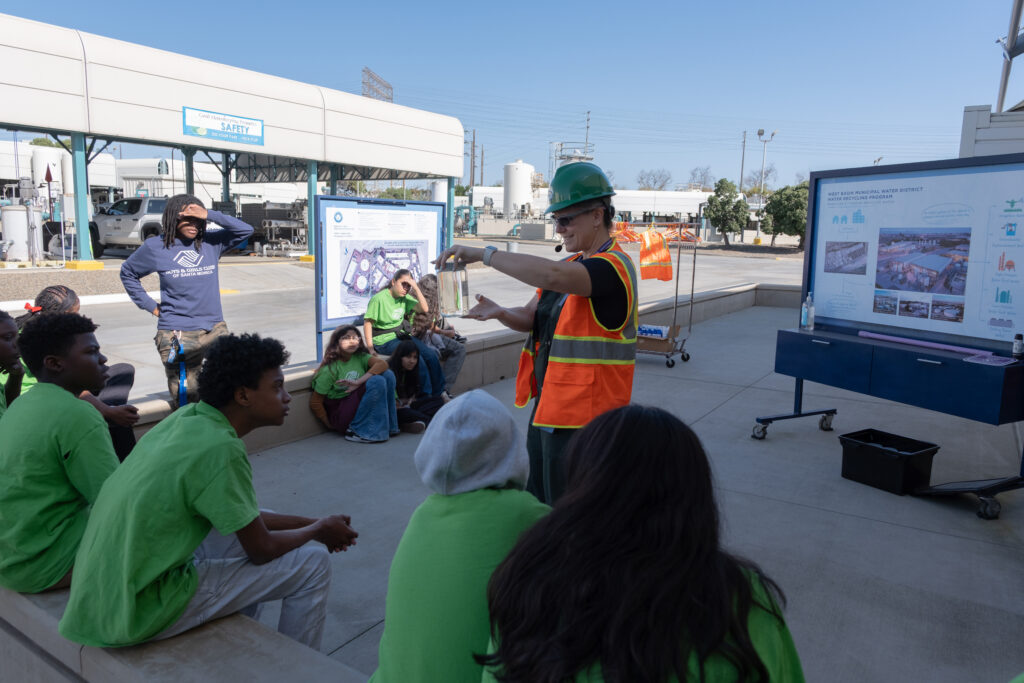

Our trip to the West Basin Municipal Water District Edward C. Little Water Recycling Facility began with a mini-lesson on how water is collected, treated, and recycled. We learned that there are different types of water treatment facilities, each designed to serve a specific purpose. This facility in particular specializes in water reclamation and advanced water recycling. It receives approximately 40 million gallons of effluent (treated wastewater) per day, which is pumped into the facility for further purification and reuse.
The staff explained the five main types of recycled water produced at the facility:
- Irrigation water, used for landscaping, agriculture, and public parks
- Groundwater recharge, where treated water is returned to underground aquifers
- High-pressure boiler water, used in industrial systems
- Low-pressure boiler water, used for heating systems
- Cooling tower water, used in industrial cooling processes
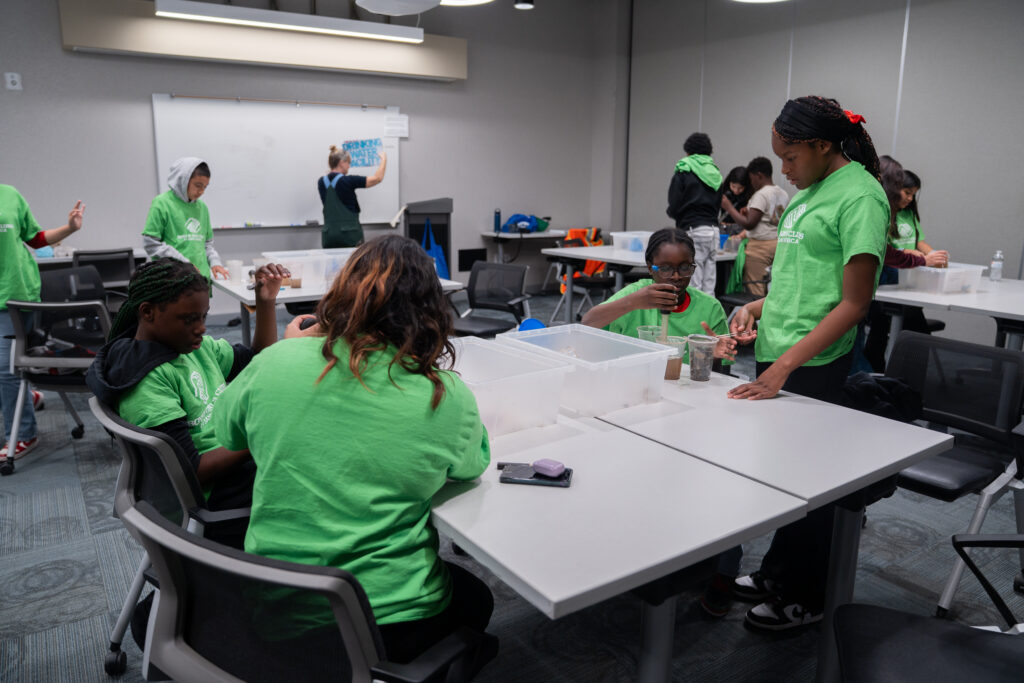
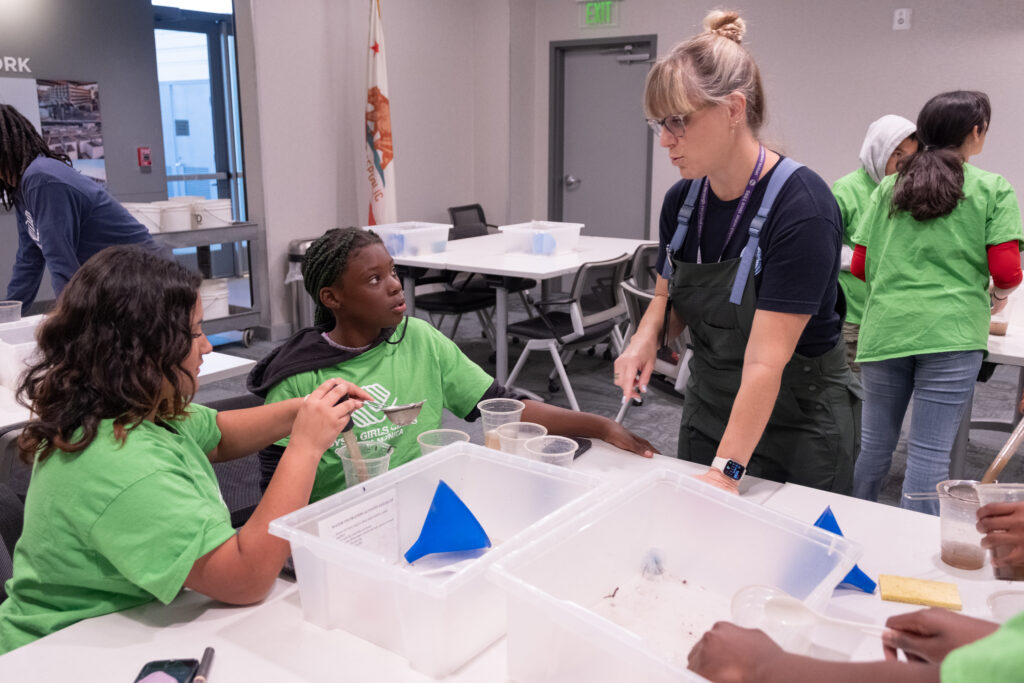
We also learned about the advanced treatment processes used at the facility, including filtration systems, sedimentation, chemical treatment, and mineral balancing. The facility uses multiple stages of purification, such as screening, biological treatment, and high-level filtration, to remove debris, contaminants, and excess nutrients from the water.
One of the most exciting parts of the trip was a hands-on experiment. Members were given “recycled” water and a variety of tools—such as strainers, cloth filters, funnels, and rocks—to simulate the water purification process. Their goal was to remove as much sediment and debris as possible to create the clearest water sample. After filtering their water, groups compared their results. One group truly mastered the purification process, producing the cleanest and clearest sample.
After the experiment, we toured the facility in proper personal protective equipment (PPE) before walking through different areas of the plant. We observed the large-scale filtration systems, pumps, pipelines, and storage basins used in the treatment process. Staff members demonstrated how machinery and chemical processes work together to remove impurities and ensure the water meets strict quality standards before being reused.
Throughout the tour, interactive activities helped demonstrate how contaminants are removed and how minerals are used to stabilize and balance the water. Members gained a deeper appreciation for the engineering, science, and technology involved in water treatment and distribution.
The experience was truly enlightening. Many members had never realized how much water is needed in so many different industries and everyday systems. The field trip not only increased their knowledge about water conservation and recycling but also opened their eyes to the importance of sustainable water management for our communities and environment.

